
What is a gutter apron? A Complete Guide to Roof Protection
Think of a gutter apron as a small, but mighty, shield for your home. It’s a simple piece of L-shaped metal flashing that creates a clean, waterproof bridge between the edge of your roof and your gutter system. Its entire job is to make sure every drop of rainwater goes exactly where it’s supposed to—into the gutter and away from your house.
The Unsung Hero of Your Gutter System
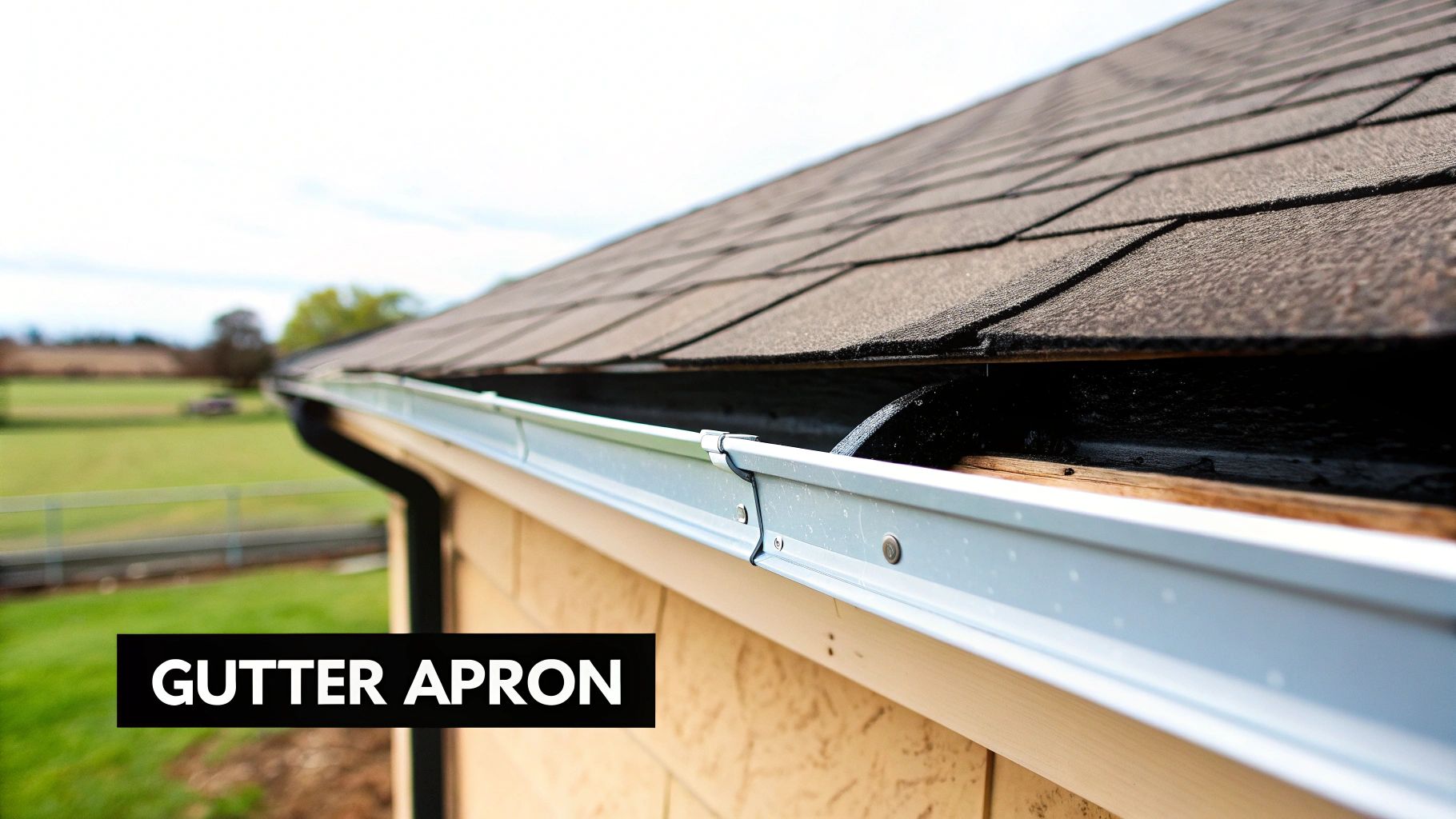
Most people never even notice it, but the gutter apron is one of the hardest-working parts of your entire roofing system. It's custom-fit to cover that tricky gap between your shingles and the fascia board—that's the vertical board right behind the gutter. By closing this gap, it creates a seamless path for water to follow.
Without an apron, water has a tendency to cling to the underside of the shingles. From there, it drips down behind the gutter, directly onto the wooden fascia and soffit. It might not seem like much at first, but over time, that constant moisture can be a recipe for rot, mold, and expensive repairs.
To put it simply, here’s a quick breakdown of what a gutter apron really does.
Gutter Apron at a Glance
| Component | Primary Function | Typical Material | Key Benefit |
|---|---|---|---|
| Gutter Apron | Bridges the gap between the roof edge and the gutter | Aluminum, steel, or copper | Prevents water from damaging the fascia and roof deck |
This little piece of metal is a non-negotiable part of a professionally installed gutter system.
Why This Component Is So Important
A gutter apron isn't just a nice-to-have accessory; it's a critical line of defense for your home. This is especially true for homeowners in places like Salt Lake City or Provo, which experience everything from heavy spring rains to significant winter snowmelt.
Here’s what it’s really doing for you:
- Preventing Fascia Rot: The apron acts as a waterproof barrier, keeping your wooden fascia boards dry and solid.
- Protecting Your Roof Deck: It stops water from wicking up under the shingles, which can lead to a rotting roof deck—a potentially catastrophic failure.
- Boosting Gutter Performance: It ensures that all the water coming off your roof makes it into the gutter channel, not behind it.
This concept has been around for centuries. Gutter aprons first appeared in the American colonies between 1710 and 1800 as a clever fix for the constant decay of early wood gutters. Today, modern data backs up that early wisdom: properly installed aprons can significantly reduce the risk of wood rot over a 20-year period. If you're curious, you can learn more about the history of roof guttering and see how this idea evolved.
A small detail like this can deliver massive long-term value. It's one of the simplest ways to prevent costly structural repairs down the road. For more information, you can visit the Prime Gutterworks homepage.
How a Gutter Apron Protects Your Home
Think of a gutter apron as your roof's first, and most important, line of defense against a very specific kind of water damage. It’s a simple piece of metal that solves a huge problem: stopping water from sneaking in where it doesn't belong.
Its main job is to prevent water from wicking up underneath your shingles. It’s a strange but true phenomenon—surface tension can actually pull rainwater backward, defying gravity and soaking the wooden sheathing of your roof. A gutter apron blocks this path, eliminating a major cause of roof rot that can hide for years before you see the damage.
Shielding Your Fascia and Foundation
The gutter apron also acts as a dedicated shield for your fascia boards, the long wooden boards sitting right behind your gutters. By directing roof runoff squarely into the gutter trough, it keeps that wood bone-dry. This simple function prevents the peeling paint, ugly mold stains, and eventual decay that so many homes suffer from.
This protection creates a positive ripple effect. When your gutters catch every drop, you prevent water from sheeting over the sides and saturating the soil right next to your foundation. A drier foundation area is crucial for avoiding leaky basements and protecting the long-term structural integrity of your home.
A gutter apron is especially critical in Utah. Winter storms often create ice dams that force melting snow and ice to push into the tiniest gaps. The apron forms a tight seal that blocks this meltwater from getting behind the gutter and into your eaves.
A Modern Take on an Old Idea
Protective flashing—the family of components a gutter apron belongs to—isn't a new concept. It’s been used in some form since medieval Europe to fight erosion. But today, it’s an indispensable part of a high-performance gutter system, boosting its overall efficiency. That's a huge deal in Utah, where heavy snowmelt can be a major factor in issues related to poor drainage.
A well-installed system is key. To get a better sense of how long your system should last with proper care, you can read our guide on how long gutters last. This is particularly useful for homeowners in communities like Lehi, where the local weather demands a robust and reliable gutter solution.
Gutter Apron vs Drip Edge: Understanding the Difference
It's easy to get roofing terms mixed up, and "gutter apron" and "drip edge" are two that homeowners often use interchangeably. While they both live at the edge of your roof and are technically types of flashing, they play very different roles in protecting your home.
Think of them as two different tools for the same general job. Both are important, but they aren't the same thing.
A drip edge is the more basic of the two. It's a small strip of metal flashing that provides a clean, finished edge to your roofline. Its main job is to give water a little "kick" outward, so it drips clear of the fascia board instead of running down its face and causing rot.
A gutter apron, on the other hand, is a much more direct and robust solution. This larger piece of L-shaped flashing tucks under your shingles and extends down over the back of the gutter, dropping right into the trough. This creates a solid, uninterrupted ramp that forces every drop of water where it belongs.
Gutter Apron vs Drip Edge Key Distinctions
Putting them side-by-side really clarifies their individual strengths. While a drip edge is better than nothing, a gutter apron provides a more comprehensive and failsafe system for managing water, especially in Utah where weather can range from summer downpours in Orem to heavy snowmelt in West Jordan.
Here’s a quick breakdown:
| Feature | Gutter Apron | Drip Edge |
|---|---|---|
| Placement | Extends from under shingles directly into the gutter. | Sits at the very edge of the roof deck, often just above the fascia. |
| Primary Function | To create a waterproof bridge ensuring all water enters the gutter. | To direct dripping water away from the face of the fascia board. |
| Size | Larger, with a longer flange extending into the gutter channel. | Smaller and more compact, with a shorter outward-facing edge. |
| Protection Level | High: Actively prevents water from getting behind the gutter. | Moderate: Helps protect the fascia but may not stop water infiltration. |
So, what's the bottom line? A drip edge offers a good, basic level of protection, but a gutter apron is the clear winner for truly effective water management. It's the difference between simply nudging water away from your fascia and actively guaranteeing it gets captured by your gutter system.
If you're unsure which is right for your home, homeowners in the Salt Lake City area can always get a professional opinion from a local expert.
How to Spot a Failing or Missing Gutter Apron
You don't always need to get up on a ladder to know something's wrong with your roof's edge. Often, the clues of a failing or completely missing gutter apron are right in plain sight, telling a story of water going where it was never meant to go. Catching these signs early can be the difference between a simple fix and a major structural headache.
The most glaring giveaway is damage to your fascia board—that’s the flat board that runs right behind your gutter. Take a look for water stains that never seem to dry, paint that's bubbling or peeling away, or even soft spots that signal wood rot. When you see this, it’s a sure sign that water is sneaking behind the gutter instead of flowing harmlessly into it.
Next time it rains, take a minute to watch the gap between your gutter and the house. See any drips running down the wall? That's a huge red flag. A properly installed gutter apron would bridge that gap and stop that from happening. This constant dampness is also a perfect recipe for mold and mildew to start growing on your soffits (the underside of your roof's overhang).
Key Warning Signs Checklist
A quick walk around your house can tell you a lot. Here’s exactly what you should be looking for:
- Stains on Fascia: Dark streaks or discoloration on the wood behind the gutters is the classic calling card of water infiltration.
- Peeling Paint: Moisture is paint's worst enemy. If it's constantly wet, the paint on your fascia will blister and flake off.
- Visible Drips: Seeing water escape between the house and the gutter during a storm means the system is failing, period.
- Mold or Mildew: Any green or black fuzzy growth on your soffits or fascia points directly to a long-term moisture problem.
People often mix up gutter aprons and drip edges, but they play different roles. A gutter apron actively protects the fascia from water damage, while a drip edge is more focused on simply diverting water flow away from the edge. This chart breaks down the difference.
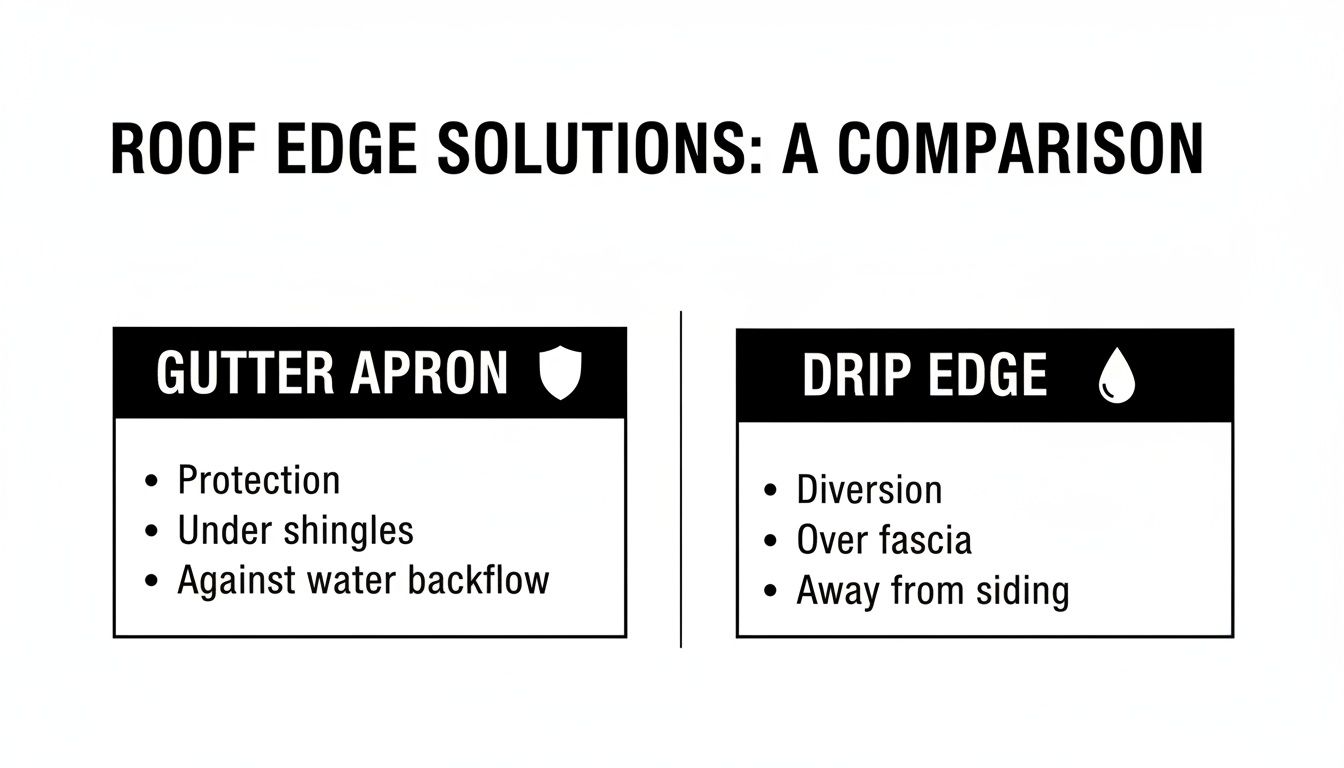
The main thing to remember is that an apron shields the vulnerable gap. If you’re spotting any of these warning signs at your home in the Provo area, it’s smart to get a professional to take a look. They can figure out the real cause and stop a small issue from becoming a big, expensive problem.
Why Professional Gutter Apron Installation Matters
It might just look like a simple strip of metal, but a gutter apron’s ability to protect your home hinges entirely on getting the installation just right. This isn’t the kind of weekend project where one can afford to learn as they go. Even small mistakes in placement or material choice can backfire, causing the exact kind of water damage you were trying to stop in the first place.
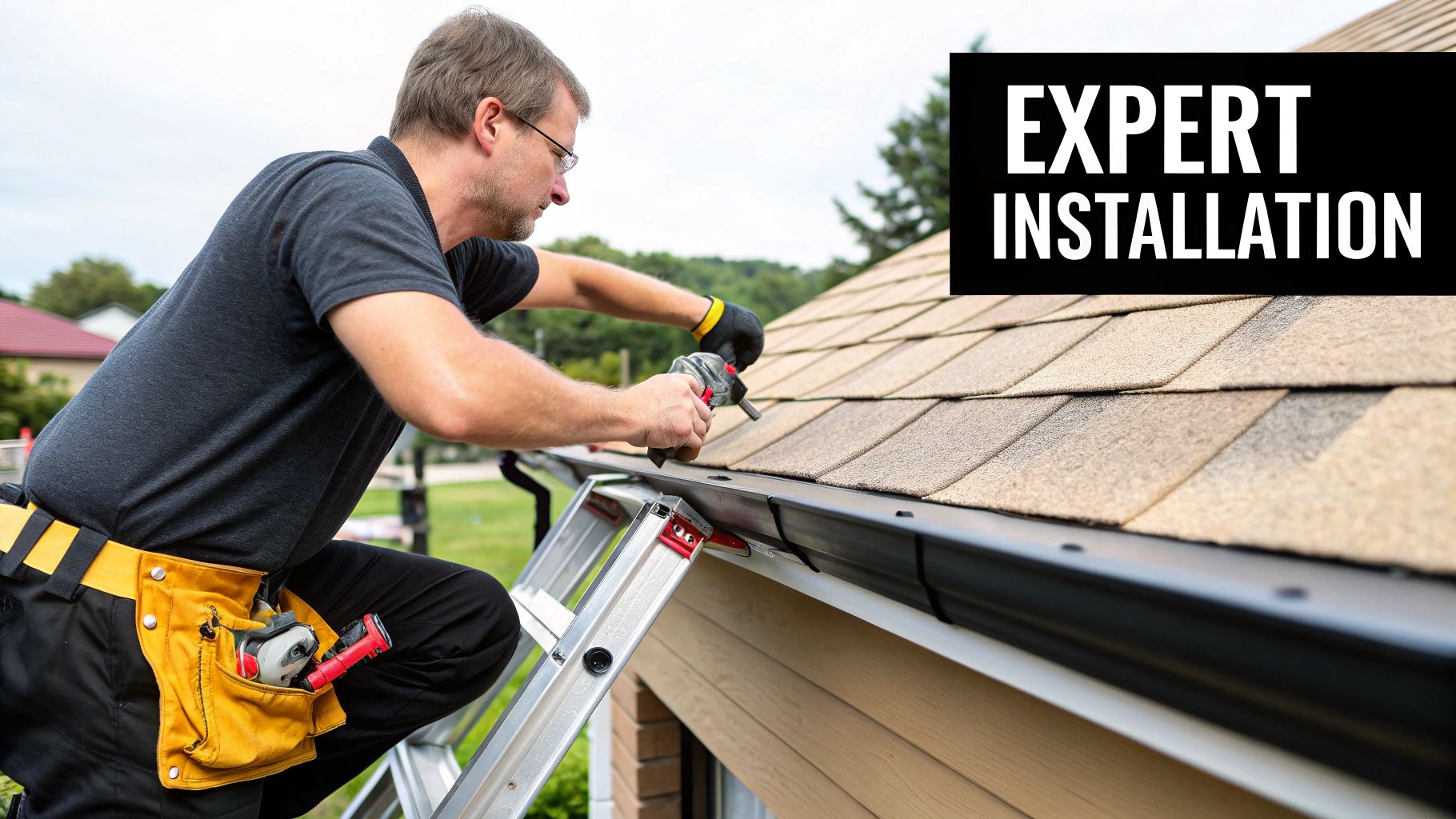
The devil is truly in the details. A professional knows exactly how to layer the apron with your roof's existing components. It has to be tucked under the shingles and felt paper but must sit over the ice-and-water shield. This specific sequence is what creates that foolproof channel for water—get it wrong, and it’s basically useless.
Plus, the angle has to be perfect. A properly installed apron guides water smoothly into the center of the gutter. But if it’s even slightly off, you’ll get water splashing over the front edge or, worse, seeping back behind the gutter.
The Risks of Improper Installation
Going the DIY route or hiring a general handyman can unfortunately open the door to some serious long-term headaches. One of the most common blunders is using the wrong materials together, like pairing a steel apron with aluminum gutters. This can create a chemical reaction called galvanic corrosion, which eats away at both metals until the whole system fails.
Proper installation is about more than just keeping water out; it’s about future-proofing your home. A professional ensures every component works together for maximum durability and performance.
An experienced pro also knows how to work around your roof without damaging it. It’s incredibly easy to crack old, brittle shingles when you try to lift them, creating brand-new leaks that are often far worse than the problem you were trying to solve. Pros have the right tools and a gentle touch for this delicate job. You can get a better sense of what a quality job involves by reading about professional gutter installation services.
Local Expertise for Long-Term Durability
For homeowners in Utah, from Orem to West Jordan, local knowledge is a huge advantage. A local contractor understands specific building codes and the unique weather challenges our homes face season after season.
The industry changed completely when seamless aluminum roll-forming machines were invented back in the early 1960s. This technology made it possible to create perfectly integrated systems where components like gutter aprons fit flawlessly. It’s a big reason aluminum is such a top choice today. When drainage failures now occur, a poor installation is almost always the culprit, leading to a massive demand for roof repairs. It's fascinating to see the developments in gutters over the years and how technology has improved home protection.
Your Gutter Apron Questions, Answered
If you're wondering what a gutter apron is and whether it's right for your home, you're not alone. Here are some straightforward answers to the most common questions homeowners ask.
Can I Add a Gutter Apron to My Existing Roof?
Absolutely. In most situations, a skilled contractor can install a gutter apron on a roof that's already in place. It's a process of carefully sliding the apron's flat upper edge underneath the first row of shingles and the roofing underlayment.
This does take a delicate hand to avoid damaging the shingles, but it's a fantastic upgrade if you’ve seen water sneaking behind your gutters. For homeowners in places like Salt Lake City or Provo, adding a gutter apron is one of the smartest preventative moves you can make against local weather—from spring downpours to heavy snowmelt.
Does Every Single House Need a Gutter Apron?
Not every older home was built with one, but today, installing a gutter apron is considered a best practice for proper water management. In a climate like Utah's, with significant rainfall and snow, it's something highly recommended. It offers the best possible defense against water infiltration, ice dams, and fascia board rot.
Think of a gutter apron as an effective safeguard. It's a small investment that helps prevent some of the most destructive and costly water damage your home can suffer.
What’s the Best Material for a Gutter Apron?
This is a critical point: the material for your gutter apron must be compatible with your gutter system. Using different metals together can cause galvanic corrosion—a chemical reaction that eats away at the metal, causing it to fail prematurely. If you have aluminum gutters, you need an aluminum gutter apron. Simple as that.
A professional installer serving communities from Orem to West Jordan will know exactly what to do to ensure the right high-quality materials are used. When you pair a properly matched apron with other protective gear, like the systems covered in a guide to gutter guards, you get a truly durable and long-lasting defense. Getting the materials right is non-negotiable for the health of your entire roofline.
For a complete assessment of your home's needs and a free, no-obligation estimate, trust the local experts at Prime Gutterworks. We ensure your home is protected with precision, quality materials, and professional craftsmanship. Contact us today to schedule your consultation at https://primegutterworks.com.