
How long do gutters last: A practical guide to lifespan and maintenance
When considering a new gutter system, a primary question is often: "How long will they actually last?" There's no single answer, but a good rule of thumb is anywhere from 15 to over 50 years. This significant range comes down to three things: the material chosen, the local Utah climate, and how well the system is maintained.
It’s the difference between a temporary fix and a real, long-term investment in protecting a home.
What Is the Lifespan of a Gutter System?
To get a handle on how long gutters will hold up, it's important to start with the material they're made of. Each option has its own trade-offs in durability, especially when considering Utah's unique weather. From the heavy snow dumps in areas like Salt Lake City to the blistering summer sun in places like Provo, picking the right material is a crucial first step.
But it’s not just about the material. A top-of-the-line system can fail early if it's ignored, while a more basic one might have surprising longevity with proper care.
Gutter Longevity by Material Type
Every material handles the elements differently. For instance, aluminum is a go-to choice for many homeowners, and it can be expected to last a solid 20-30 years with proper care. On the other end of the spectrum, vinyl gutters often have a shorter lifespan of just 10-15 years because intense sun and temperature swings can make them brittle and prone to cracking.
Galvanized steel is a tougher option, but it still has a typical 20-year lifespan before rust can become a serious problem. Then there is copper, which can easily last more than 50 years and maintain its appearance. If you want to dig deeper, you can discover more insights about gutter materials on Angi.com.
This is why choosing the right material from the get-go is so important. This chart breaks it down visually.
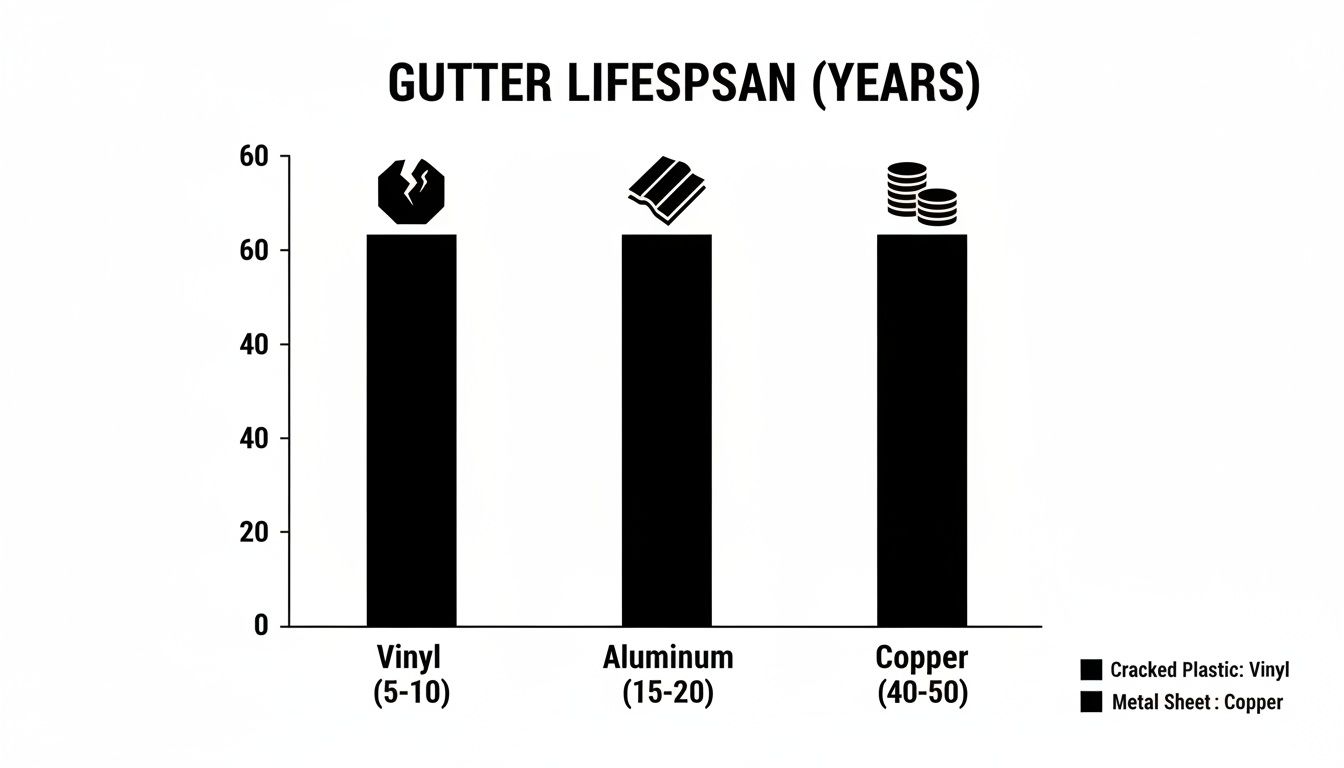
As you can see, some materials are less expensive upfront, but others deliver decades of performance, making them a smart investment over the life of a home.
Here's a quick summary of what to expect from the most common gutter materials seen on homes in Utah.
Gutter Lifespan at a Glance by Material
| Aluminum | 20-30 years | Resists rust, lightweight, handles snow well, and comes in many colors. A great all-around choice. |
|---|---|---|
| Vinyl (PVC) | 10-15 years | Inexpensive, but can crack under UV exposure and become brittle in cold winters. |
| Galvanized Steel | 20 years | Very strong and durable against snow and ice, but susceptible to rust if scratched or not maintained. |
| Copper | 50+ years | Extremely durable, naturally resists corrosion and algae, and develops a beautiful patina over time. The premium choice. |
This table gives you a solid baseline, but remember that proper installation and maintenance are what will truly make or break any of these systems.
Key Factors Influencing Gutter Durability
Material choice is huge, but it's not the whole story. For homes in areas from Orem and Lehi to West Jordan, it is important to keep these factors in mind:
- Installation Quality: This is non-negotiable. A gutter system that’s improperly pitched or loosely attached is set up for failure from day one, no matter what it's made of.
- Local Climate: Utah's freeze-thaw cycles are brutal. Add in heavy snow loads and intense high-altitude UV rays, and you have a recipe for serious wear and tear.
- Maintenance Frequency: This is the big one. Regularly cleaning out leaves and debris is the single best thing you can do to get the most life out of your gutters.
A well-maintained gutter system is your home's first line of defense against water damage. Its longevity is directly tied to the quality of the materials chosen and the consistency of its upkeep.
Understanding how these pieces fit together helps you make a smarter decision for your home. To see how gutter systems can be designed to last, check out the Prime Gutterworks home page.
Why Gutter Material Matters for Longevity
When choosing a gutter system for a home, it's like picking out the right coat for a Utah winter. A lightweight windbreaker might seem like a good deal on a mild autumn day, but it’s going to be inadequate when a real storm hits. The material your gutters are made of works the same way—it's the single biggest factor in determining how long your gutters will last and how well they can actually protect your home.
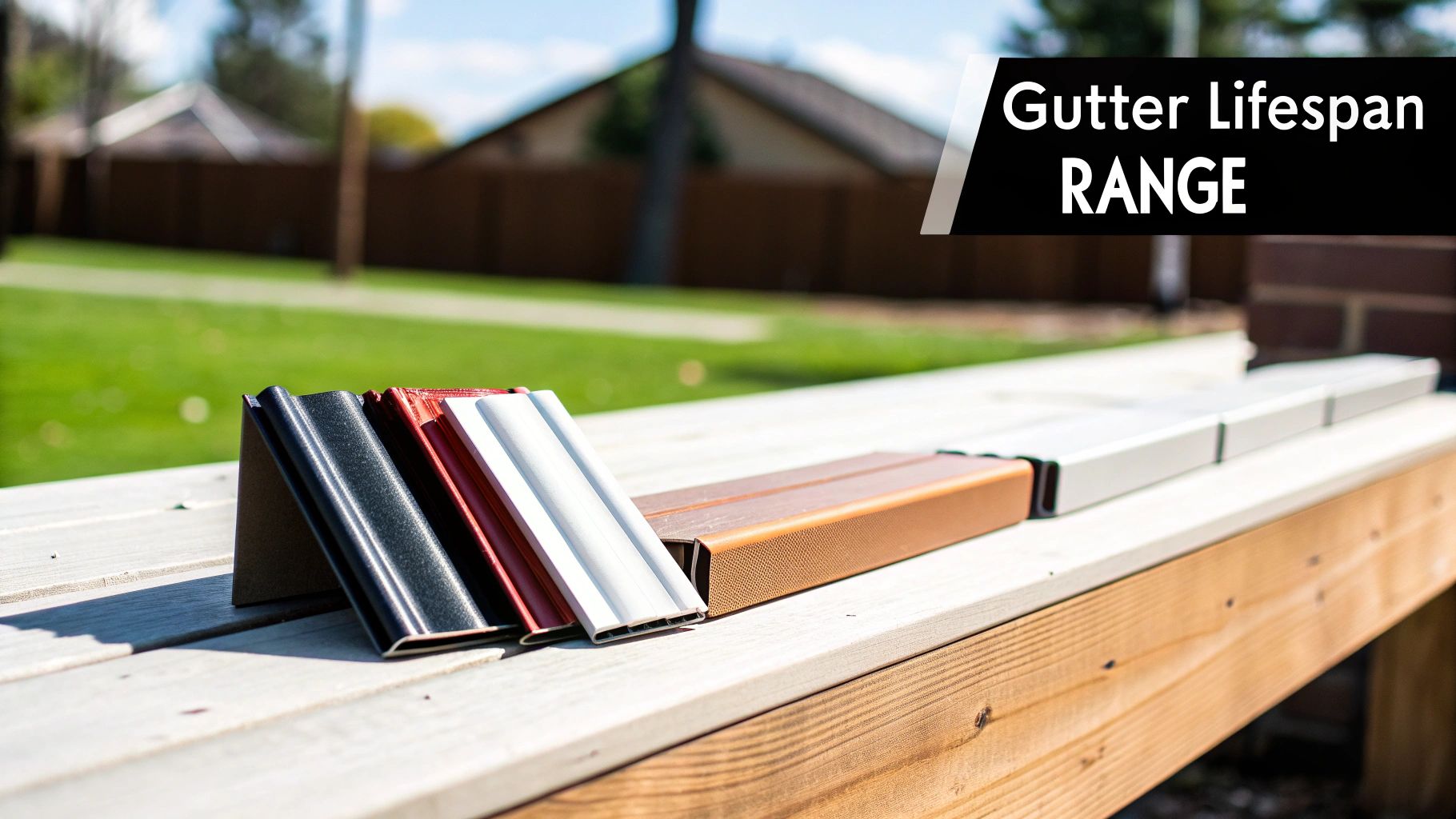
Not all gutter materials are built to handle the demanding climate along the Wasatch Front. From the heavy snow loads seen in Salt Lake City to the intense summer sun that beats down in Lehi, each material reacts differently. Understanding those differences is the key to making a smart investment that you won't regret in a few years.
A Breakdown of Common Gutter Materials
Let's walk through the most common options and break down how they really perform over time. Each one has its own set of pros and cons that directly impact its lifespan.
Vinyl Gutters
Vinyl is almost always the most affordable option upfront. But that low initial cost comes with a big catch: durability. The constant freeze-thaw cycles can make it incredibly brittle and prone to cracking under the weight of snow and ice. The intense summer sun doesn't help either, often causing them to warp and sag.
Because of this, vinyl gutters often don't last long here. Homeowners can typically expect to get 10 to 15 years out of them before they start failing.
Steel Gutters
Galvanized steel is a big step up in strength. It's tough and can handle the crushing weight of a heavy, wet Utah snowfall without buckling. That ruggedness makes it a solid contender. The problem? Rust.
As soon as that protective galvanized coating gets scratched—from a ladder, a falling branch, or just years of wear—the steel underneath is exposed. Rust can take hold fast, eating through the metal and causing leaks. With consistent upkeep, you can get about 20 years out of steel gutters, but you have to stay on top of them.
Aluminum Gutters
For most homeowners, aluminum is the sweet spot. It hits a great balance of strength, longevity, and affordability. It's surprisingly lightweight, yet it's more than strong enough for our weather. Best of all, it's completely rust-proof. That immunity to corrosion gives it a huge leg up on steel.
When installed correctly and maintained, a good aluminum gutter system will reliably last 20 to 40 years. It's a fantastic, practical solution for homes anywhere from Orem to West Jordan.
Copper Gutters
Copper is in a league of its own. It's a top-tier choice, prized for its incredible durability and classic, high-end look. Copper is extremely strong, will never rust, and even has natural properties that stop moss and algae from growing. Over the years, it develops that beautiful blue-green patina that adds a ton of character to a home.
Copper isn't just a gutter system; it's a lifetime investment for your home. It can easily last over 50 years, and it’s not uncommon to see copper gutters still going strong after 100 years.
The Seamless Advantage for Utah Homes
Beyond the material itself, the way your gutters are constructed is just as important. For decades, the standard was sectional gutters, which come in 10-foot pieces that are connected along the roofline. Every single spot where two pieces connect is a seam. And every seam is a weak point waiting to leak, snag debris, and eventually fail.
This is exactly why seamless aluminum gutters are a superior choice for homes all across Utah.
- Custom Fabrication: Instead of using pre-cut pieces, a single, continuous gutter is formed right at the house, measured to fit perfectly. This completely eliminates all those weak-point seams.
- Fewer Leaks: The only joints are at the corners and downspouts. By cutting out dozens of potential failure points, the risk of leaks that can rot fascia boards and damage the foundation is drastically reduced.
- Enhanced Durability: A solid, seamless trough is structurally stronger. It’s far less likely to sag, warp, or pull away from the house under the strain of heavy snow and ice.
By getting rid of the seams, you get rid of the number one cause of gutter failure. It’s a simple change that makes the entire system stronger and longer-lasting, giving you far better protection for years to come. To see how these modern systems work, you can find more info on the Prime Gutterworks home page.
How Utah's Climate Puts Your Gutters to the Test
The material your gutters are made from is a huge piece of the puzzle, but the real test comes from Mother Nature. Here in Utah, our weather isn't just background noise; it's an active force constantly working against a home's exterior. To really understand how long gutters last, you have to look at the specific environmental challenges they face, season after season.
Living anywhere from Salt Lake City to Provo means you’re dealing with a true four-season climate that can be surprisingly tough on a house. These are tangible forces that can slash the lifespan of even a professionally installed gutter system. A setup that works perfectly fine in a mild coastal town might fail spectacularly here.
The Crushing Weight of Snow and Ice
Utah winters are well-known, and all that beautiful snow comes with a hefty weight. That famous "champagne powder" gets wet and compacts on a roof, and a single foot of it can easily weigh over 20 pounds per square foot. As that snow melts and slides, all that immense weight gets dumped directly into the gutters.
This constant, heavy load is a primary cause of gutters sagging, pulling away from the fascia boards, or in some cases, ripping off the house completely. It’s exactly why weaker materials like vinyl are often a poor choice for homes in places like Lehi or anywhere else along the Wasatch Front.
Even more destructive, though, are ice dams. This is what happens when melting snow hits the cold edge of a roof and refreezes, creating a literal dam of ice inside the gutters. Water gets trapped behind it, backs up, and can be forced right under the shingles, leading to roof leaks and interior water damage. The sheer expansion force of the ice as it freezes can bend, split, and completely destroy entire sections of a gutter system.
The Relentless Freeze-Thaw Cycle
One of the most insidious threats to gutters in Utah is our relentless freeze-thaw cycle. It’s incredibly common for temperatures to swing from above freezing during the day to well below freezing at night, especially in the spring and fall.
This cycle can be compared to bending a paperclip back and forth until it breaks. That’s essentially what this process does to gutters. Water seeps into a tiny crack or joint, freezes overnight, and expands, forcing the gap open just a little wider. This happens again and again, thousands of times over a gutter's life.
This constant expansion and contraction puts enormous stress on the gutter materials themselves, and especially on the seams and joints where sections connect.
- Material Fatigue: Over time, this cycle can make metal brittle and cause plastic to crack.
- Seam Separation: The pressure pries sealed joints apart, turning a minor weak spot into a major leak.
- Loose Fasteners: All that movement can gradually work fasteners loose, causing the gutters to sag and eventually detach.
This is a huge reason why seamless gutters have such a big advantage—they simply eliminate most of these vulnerable points of failure.
Intense High-Altitude UV Radiation
The sun hits differently here. Our high elevation means there's less atmosphere to filter out damaging ultraviolet (UV) radiation. This intense, year-round sun exposure acts like a silent destroyer for certain types of gutter materials.
For materials like vinyl, high-altitude UV rays are particularly brutal. They break down the plastic polymers, causing the material to become chalky, brittle, and prone to cracking under the slightest physical stress—like the weight of a ladder or a heavy snowfall.
This UV degradation dramatically shortens the lifespan of less durable materials. It also causes the paint and protective coatings on steel and aluminum gutters to fade and peel much faster than they would at sea level. This exposes the raw metal underneath to the elements, kicking corrosion and rust into high gear. For homeowners in sunny spots like West Jordan and Orem, picking a UV-resistant material isn't a luxury; it's critical for getting your money's worth. You can see durable, climate-ready solutions over on the Prime Gutterworks home page.
The Critical Role of Regular Gutter Maintenance
If there's one single thing a homeowner has complete control over to get the most life out of their gutters, it’s maintenance. Plain and simple. Neglected gutters are guaranteed to fail early, regardless of what they're made of. It's like changing the oil in a car—it’s a basic, routine task that helps prevent catastrophic, expensive failures down the road.

A clean, clear gutter system does its job perfectly, channeling water far away from a home's foundation, siding, and roof. But as soon as it gets clogged with leaves, twigs, and gunk, it goes from being an asset to a major liability. That trapped water gets incredibly heavy, putting a massive strain on the hangers and fasteners holding the whole system to the house. This is the number one cause of sagging, pulling away, and eventually, total collapse.
Your Gutter Maintenance Schedule
For most homes, a good rule of thumb is to clean gutters twice a year: once in the spring to clear out whatever winter left behind, and again in the late fall after all the leaves are down. But for many homes in Utah, that's often not enough.
The payoff for proper upkeep is huge. Some industry studies have found that regular maintenance can literally double a gutter's lifespan. That could turn a standard 20-year aluminum system into one that holds up for 40 years. Simply cleaning them out twice a year can prevent up to 70% of premature failures that are directly caused by clogs and overflow.
Along the Wasatch Front, a single mature tree can drop a staggering 500 pounds of leaves onto a roof each season. That's why many local professionals recommend cleaning gutters two to four times a year. Making that simple adjustment can boost a gutter's durability by another 50%.
A clogged gutter is more than just a nuisance; it's a direct threat to your home's structural integrity. The excess weight and overflowing water are the root causes of most premature gutter failures and related home damage.
It is important to consider the specific property when making a schedule. For a home in a newer Lehi development with just a few young trees, twice a year is probably fine. But for a home in a mature Salt Lake City neighborhood surrounded by big trees, more frequent cleanings will be needed to stay ahead of problems.
What Professional Gutter Cleaning Should Involve
While it is possible to climb a ladder and do it yourself, hiring a professional service ensures the job is done safely and, more importantly, completely. A real cleaning is much more than just scooping out leaves.
Here’s what a proper service should always include:
- Complete Debris Removal: Technicians should meticulously clear out everything—leaves, twigs, shingle grit, and dirt—from every single section of the gutter system.
- Downspout Flushing: This is a non-negotiable step. Every downspout has to be flushed with water to guarantee there are no hidden clogs deep inside. A blockage here is a common and sneaky cause of overflow.
- System Inspection: While they're up there, a good professional will give the system a once-over, looking for loose fasteners, rust spots, cracks, or sagging sections that need to be addressed.
- Thorough Cleanup: All the gunk that comes out of the gutters should be bagged up and hauled away, leaving the property looking spotless.
For homeowners in Orem, Provo, and West Jordan, investing in a professional service is one of the smartest things you can do to protect your property. A detailed approach can help ensure gutters are working perfectly; you can learn more about professional gutter cleaning services and see how homeowners all over the valley are being helped.
Gutter Guards: A Low-Maintenance Solution
For those who want to reduce cleaning frequency, gutter guards are an excellent alternative. These systems fit over existing gutters, letting water flow in while keeping leaves and big debris out. They don't make gutters completely maintenance-free—it's still wise to give them a look once in a while—but they can drastically cut down on how often a full cleanout is needed.
For many Utah homeowners, gutter guards provide real peace of mind, especially during the heavy leaf-drop in the fall and right before the winter snows start piling up. It's a proactive investment that makes the entire gutter system stronger and longer-lasting.
Warning Signs Your Gutters Need Replacing
It’s easy to ignore gutters until something goes wrong, but they're one of a home’s most critical lines of defense. When they start to fail, they don't always do it dramatically. Most of the time, they give little hints that trouble is brewing. Learning to spot these clues is the key to preventing a small gutter issue from turning into a major headache involving the roof, siding, and even the foundation.
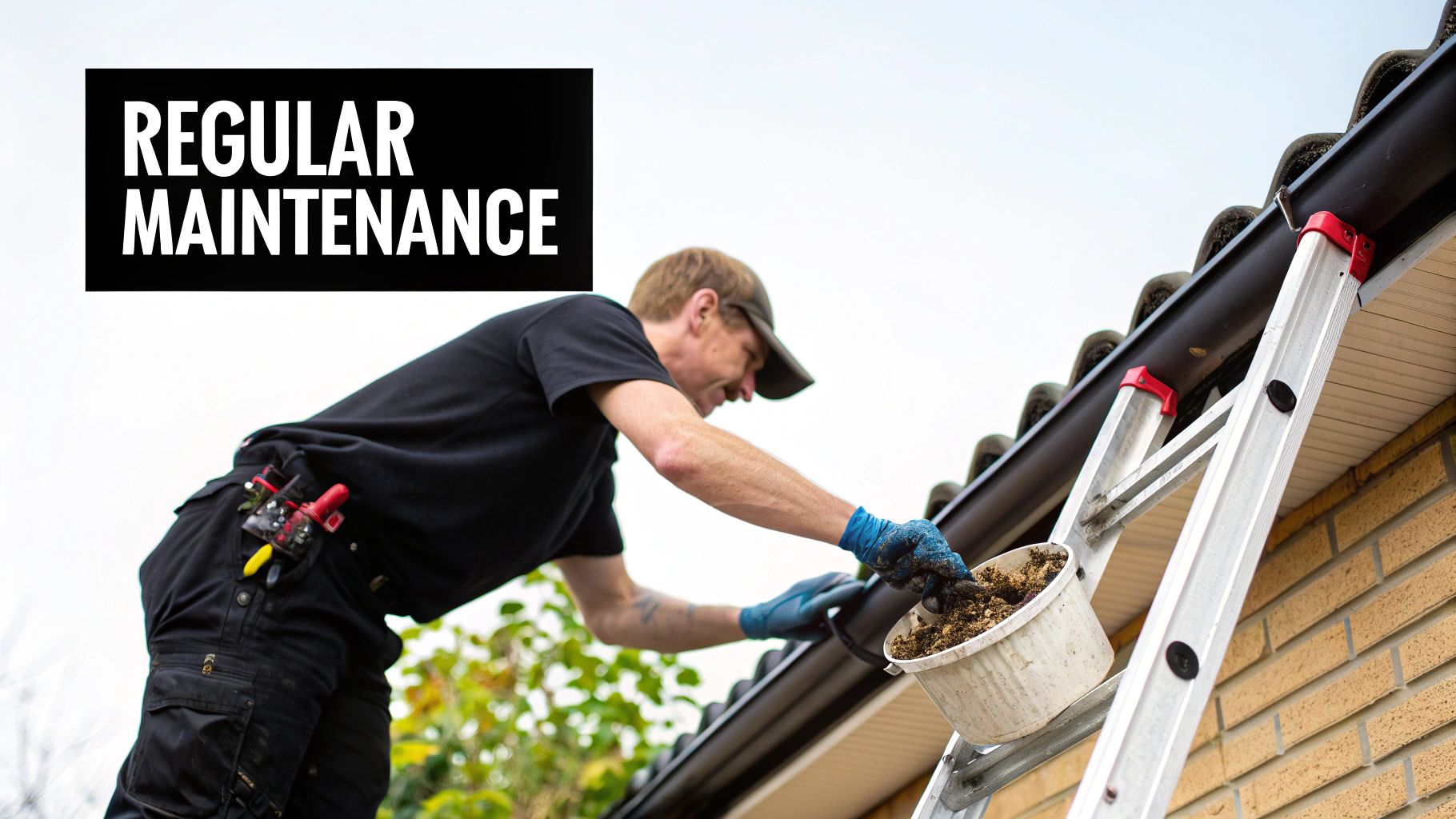
Many people think the only sign of a failing gutter is when it's literally hanging off the house. The reality is, the problems usually start much smaller and quieter. A quick visual inspection a few times a year can save a lot of trouble. Here’s a practical checklist of red flags to look for.
Obvious Physical Damage
Some of the most serious warning signs are the ones you can spot from the driveway. If you see any of these, the gutters are struggling and likely on their last legs.
- Cracks, Holes, or Splits: Even a tiny crack is a big deal. It’s an escape route for water that should be heading to the downspout, sending it down siding or pooling at the foundation instead. Here in Utah, those small cracks can be forced open by ice during freeze-thaw cycles, making them worse in a hurry.
- Sagging or Pulling Away: Gutters should be straight. If they are bowing down in the middle or pulling away from the roofline, that's a major warning sign. It means the system is holding too much weight—usually from a clog of wet leaves and debris—and the fasteners are giving up.
- Broken or Loose Fasteners: Finding long screws or spikes on the ground near the house could mean they came from the gutters. When the hardware that secures the system to the fascia boards starts failing, a total collapse isn't far behind.
Spotting any of these issues means the gutter system is compromised. While it might be possible to patch a single small crack, widespread problems like sagging or multiple fractures usually mean the whole system needs attention. In that case, looking into a professional gutter installation service is a real long-term fix.
Subtle Signs of Water Mismanagement
Not all gutter problems are so obvious. Sometimes, the evidence is more subtle, left behind by water that’s consistently overflowing or leaking where it shouldn't be. These are often signs of a long-term issue.
Think of peeling paint on your siding, soffit, or fascia boards as a clue. It’s not just a cosmetic issue. Exterior paint is made to stand up to the weather, so when it starts bubbling and flaking, it's almost always because it's being constantly soaked by a slow leak from above.
Another dead giveaway is water pooling around a home's foundation. Take a walk around the house after the next rainstorm. If you see puddles forming right under the edge of the roof, the gutters aren't doing their job of directing water away from the home. That's a direct threat to the basement and foundation.
Keep an eye out for these other subtle hints, too:
- Water Stains or Mildew: Look for dark, streaky stains or green mildew on the fascia or siding. That’s a clear sign water is constantly escaping.
- Landscape Erosion: Noticing little trenches being carved into mulch or flowerbeds right below the gutters? That’s from water pouring over the sides instead of going down the spout.
- Rust or Orange Streaks: For steel or older aluminum gutters, any orange streaks or rust spots mean the protective finish is gone and the metal is corroding. Those rust spots will eventually turn into holes.
Catching these problems early is the difference between a simple replacement and a complex home repair. A gutter system showing these symptoms is no longer protecting the home—it's actively damaging it. If you're seeing these warning signs at a home in Salt Lake City, Provo, or Orem, it's definitely time to have a professional take a look.
Choosing a Gutter System That Lasts
Knowing what makes a gutter system last is the key to protecting your home. It really boils down to three things: picking the right material, making sure it’s suited for our Utah climate, and keeping up with maintenance. When you understand this, you can stop spending money on temporary patches and choose a real, long-term solution.
Putting a quality, professionally installed gutter system on a house is one of the smartest moves a homeowner can make. It's not just about directing rain; it's about preventing the kind of expensive water damage that can ruin a foundation, siding, and landscaping for years to come.
Your Local Gutter Experts in Salt Lake and Utah County
At Prime Gutterworks, our focus is on gutter systems built specifically for the weather conditions along the Wasatch Front, from Salt Lake County down to Utah County. We specialize in custom-fabricated seamless gutters, which is a way of saying we get rid of the weak spots—the seams—where most traditional gutters leak and fail.
We use tough, rust-proof materials that are made to handle Utah's heavy snow loads, intense summer sun, and brutal freeze-thaw cycles.
Making the right choice in a gutter system isn't just about avoiding repairs; it's about proactively safeguarding your home's foundation, roof, and siding from the persistent threat of water damage.
Our installation process ensures new gutters are a perfect, custom fit for a home’s specific roofline. This isn't a one-size-fits-all job. For homeowners in Salt Lake City, Provo, Orem, and the surrounding areas, getting that tailored fit is what makes all the difference. We can also talk about ways to make life easier—for instance, gutter guards can protect your system and practically eliminate the need for cleaning.
Feel free to take a look around the Prime Gutterworks home page and see why homeowners from Lehi to West Jordan have turned to us for their homes. When you’re ready for a gutter solution that’s built to last, we’re here to help.
Got Questions About Gutter Lifespan? We’ve Got Answers.
When it comes to gutters, most homeowners have the same set of questions. Understanding the ins and outs of gutter care is key to making the right call for your home, whether you're dealing with the lake effect snow in Salt Lake City or the summer sun in Provo.
Let's dive into some of the most common questions our team hears.
Can I Just Repair My Gutters, or Do I Need to Replace Them?
Sometimes, a simple repair is all that is needed. If you're looking at a single leaky seam, a small crack in one section, or a bracket that’s come loose, a targeted fix can make sense.
But when the problems start piling up, it’s a different story. If you're seeing rust everywhere, multiple cracks, or long sections sagging away from the roof, you're looking at systemic failure. Patching one spot won't stop another from failing next month. In that scenario, a full replacement is the smarter, more cost-effective choice in the long run.
Are Gutter Guards Really Worth It? Do They Help Gutters Last Longer?
Absolutely. Gutter guards can make a huge difference in the longevity of your system. Their primary job is simple but critical: keep leaves, pine needles, and other gunk from clogging up the works.
Think about it—all that wet, heavy debris puts a constant strain on gutters, causing them to sag and pull away from a home. By keeping the channels clear, guards prevent that stress. They also stop water from overflowing and rotting out fascia boards or pooling around the foundation. So, they don't just protect the gutters; they protect the whole home.
Investing in gutter guards is one of the best proactive moves you can make. It takes the physical strain off your gutters and slashes the amount of time you have to spend cleaning them.
Why Do Seamless Gutters Last So Much Longer Than Sectional Ones?
The secret is right in the name. Traditional sectional gutters are sold in 10-foot pieces that are linked together, creating a seam every ten feet. Every single one of those seams is a potential failure point—a place for leaks to start, rust to form, and sections to pull apart.
Seamless gutters, on the other hand, are custom-made right at your home from a single, continuous piece of metal. This design gets rid of all those vulnerable joints. With seams only at the corners and downspouts, the entire system is structurally stronger, far less likely to leak, and built to last significantly longer.
Ready to protect your home with a gutter system built for Utah's climate? The experts at Prime Gutterworks offer professional installation, cleaning, and maintenance services designed to last. Visit us at https://primegutterworks.com to schedule a free, no-obligation estimate today.