
A Complete Guide to Radius Rain Gutters
When your home has beautiful curves—like a turret, a bay window, or a rounded entryway—standard, straight-cut gutters just won’t do the job right. That’s where radius rain gutters come in. Think of them as a custom-tailored suit for your roofline, designed to follow every contour perfectly.
What Are Radius Rain Gutters and Why They Matter
Many homes, especially those with more unique designs, are more than just straight lines and right angles. Those rounded features are what give a house its character. But they also pose a serious challenge for managing rainwater.
Trying to force a straight gutter onto a curved roofline can lead to a system with awkward angles, gaps, and weak spots. This is why a properly fabricated radius rain gutter isn't just a cosmetic choice; it's a functional necessity for protecting your home.
The Problem with Standard Gutters on Curved Surfaces
Standard gutters are made in long, straight sections. To fit a curve, an installer might attempt to cut them into small, angled pieces and then connect them with sealant. This patchwork approach can be prone to failure.
Here are some potential issues with that approach:
- Potential for Leaks: Every single seam is a potential leak point. In Utah, the intense sun and freeze-thaw cycles can degrade sealant over time, leading to leaks that may damage your fascia, siding, and even your foundation.
- Clogs and Overflows: Multiple joints and corners can disrupt the smooth flow of water. This makes it easier for leaves and debris to get stuck, causing clogs and overflows right where you can least afford them.
- Aesthetic Compromise: A choppy, segmented gutter system can detract from the look of an elegant architectural curve. It can be a clumsy fix that detracts from your home's curb appeal.
A true radius gutter is different. It’s formed from a single, continuous piece of metal, custom-bent to match the exact arc of your roof. This seamless design eliminates the risks of segmented gutters and enhances the very architectural lines it’s there to protect.
For homeowners in communities from Orem to West Jordan, a specialized solution is the best way to safeguard a home with distinctive curves. Professional installation of custom-fit radius rain gutters is a key service for such properties. To learn more about our services throughout Utah, visit our homepage.
The Art of Fabricating Curved Gutter Systems
You typically can't find radius rain gutters at a standard hardware store. Unlike their straight-edged cousins, these systems often involve craftsmanship and are custom-built for a specific roofline. Each piece is meticulously shaped to hug the unique curves of a home's architecture, a process that demands both precision machinery and a skilled hand.
A common technique for creating these perfect arcs is called stretch forming. A straight, seamless gutter is carefully bent using specialized equipment to the exact radius needed. This method is key because it shapes the metal smoothly, preventing any kinks, weak spots, or wrinkles that could compromise the gutter's strength and function down the line.
Choosing the Right Material for the Curve
The metal you choose has a huge impact on how well your curved gutters will perform and look. Some materials bend more easily than others, while some offer unmatched durability or a specific aesthetic. It’s all about finding the right balance for your home.
Here's a breakdown of the most common materials and how they stack up for creating curved gutters.
Radius Gutter Material Comparison
| Aluminum | Excellent. Its flexibility allows for smooth, precise curves without cracking. | Very durable, rust-proof, and typically lasts 20+ years. | Comes in the widest range of factory-applied colors to match any home. |
|---|---|---|---|
| Copper | Fantastic. Highly malleable, making it perfect for even complex or tight curves. | Extremely durable, lasting 50-100+ years. Develops a classic green patina. | Unmatched high-end, timeless look that adds significant character. |
| Steel | Good, but more challenging. Its stiffness makes it harder to form tight radii. | The strongest option, ideal for heavy snow loads. Prone to rust if not maintained. | Fewer color options, but offers unparalleled strength and resilience. |
Ultimately, the best material depends on your home’s style, your budget, and the specific demands of the Utah climate.
The demand for high-quality, custom water management solutions is growing. In fact, the global rain gutter market is expected to hit $8.25 billion by 2029, driven by homeowners who understand that preventing water damage starts with the right system. Here in Utah, from Provo to Salt Lake City, that means choosing gutters built to handle our intense weather cycles. You can explore the full research on the global rain gutter market to see just how important this industry has become.
Why On-Site Fabrication Is a Game-Changer
The most accurate radius rain gutters are often made right at your home. This allows technicians to take real-time measurements and fine-tune the curves on the spot. It's the best way to eliminate guesswork and guarantee a truly perfect, gap-free fit against your roofline.
This simple diagram illustrates the crucial role these custom systems play in protecting your home.
As you can see, a properly fabricated curved gutter is the vital connection between a downpour and keeping your foundation, siding, and landscaping safe and sound.
Getting Your Radius Gutter Installation Right
Putting up a radius rain gutter is a different ballgame than a standard straight-run installation. This isn't a simple DIY weekend project; it's a craft where absolute precision is the name of the game. If done incorrectly, you could be looking at a system that doesn't just look off—it won't work correctly, leading to potential headaches down the road.
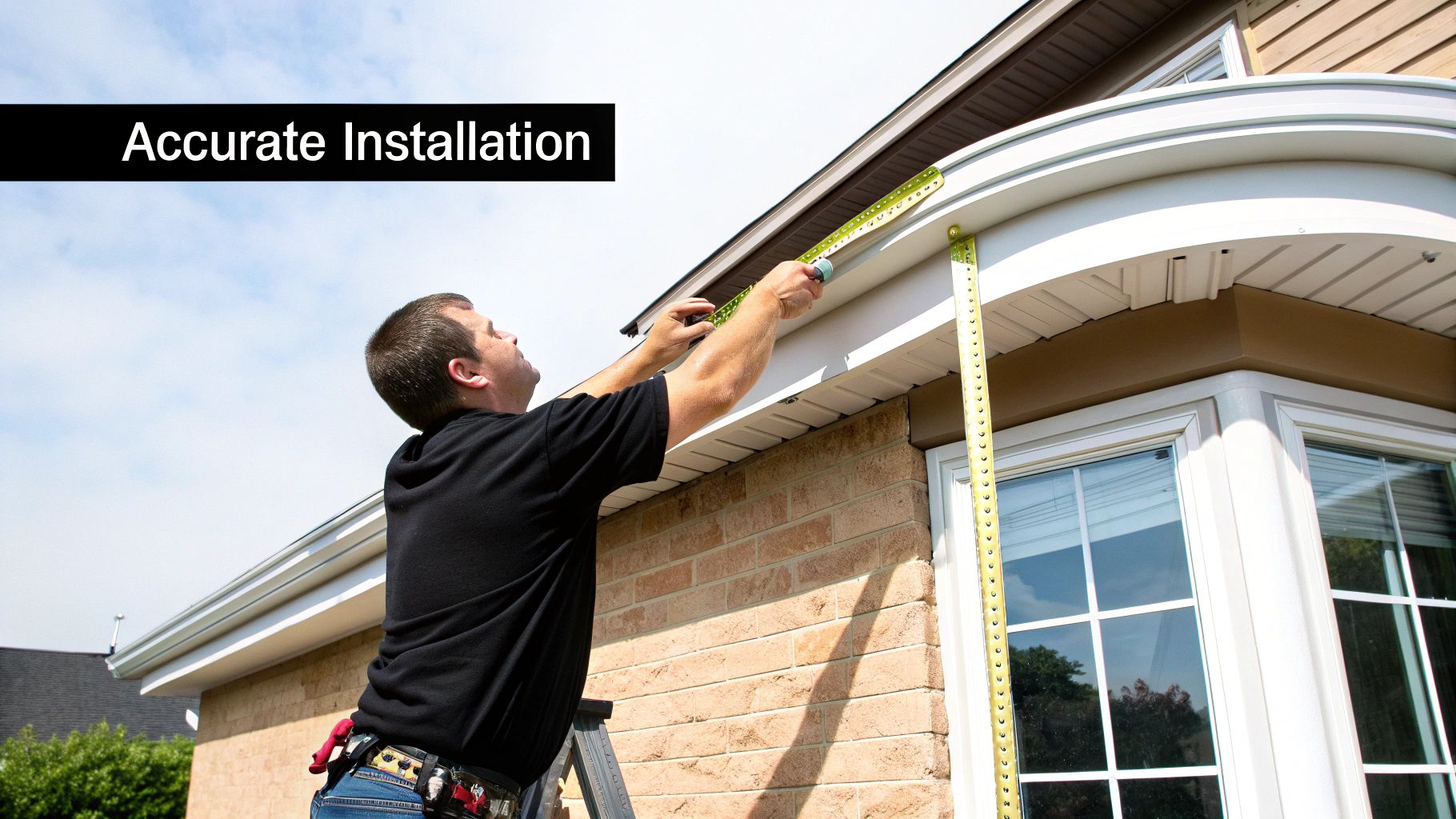
It all begins with measurements that leave no room for error. A seasoned pro doesn’t just eyeball the curve. They meticulously map the exact arc of your home’s fascia, creating a precise template. This blueprint is what guides the fabrication process, ensuring the final gutter hugs the roofline perfectly, with zero gaps for water to sneak behind.
Is Your Fascia Board Up to the Task?
Before any gutter goes up, it is important to consider the fascia board. This is the surface where the entire system is mounted, and for a custom-curved gutter, it needs to be in tip-top shape. Any rot, warping, or uneven surfaces will sabotage a secure fit from the start.
A good installer always starts with a thorough fascia inspection. If there's any sign of damage, it must be repaired or replaced first. Trying to hang a heavy, custom-shaped gutter on a weak foundation is just asking for it to sag and fail, especially once it’s loaded with rainwater or heavy Utah snow.
This attention to detail is why choosing the right professional matters. The U.S. gutter services industry is a large market filled with providers of all skill levels. For homeowners dealing with Utah's heavy snowmelt—which can contribute to water-related home damages—a licensed, insured expert is a wise choice.
Where You Put the Downspouts Matters—A Lot
Even a perfectly shaped and mounted gutter is useless if the water has nowhere to go. This is where strategic downspout placement comes in, and on a curve, it’s both an art and a science. They have to be positioned at just the right spots along the arc to let gravity do its work.
Poor downspout placement is one of the most common reasons curved gutter systems fail. It can cause water to pool in the center of the curve, leading to overflows and standing water that may damage your home.
Properly placed downspouts ensure water flows smoothly and efficiently out of the gutter, protecting your siding, foundation, and landscaping from damage. A professional gutter installation takes all these factors into account to deliver a system that doesn't just look fantastic but functions flawlessly for years to come.
How to Properly Maintain Your Curved Gutters
Once you have custom-fabricated radius rain gutters to protect your home and boost its unique style, the key is keeping them in top shape so they can do their job for years to come. While their seamless design is great at preventing leaks, they still face the same challenge as any other gutter in Utah: debris.
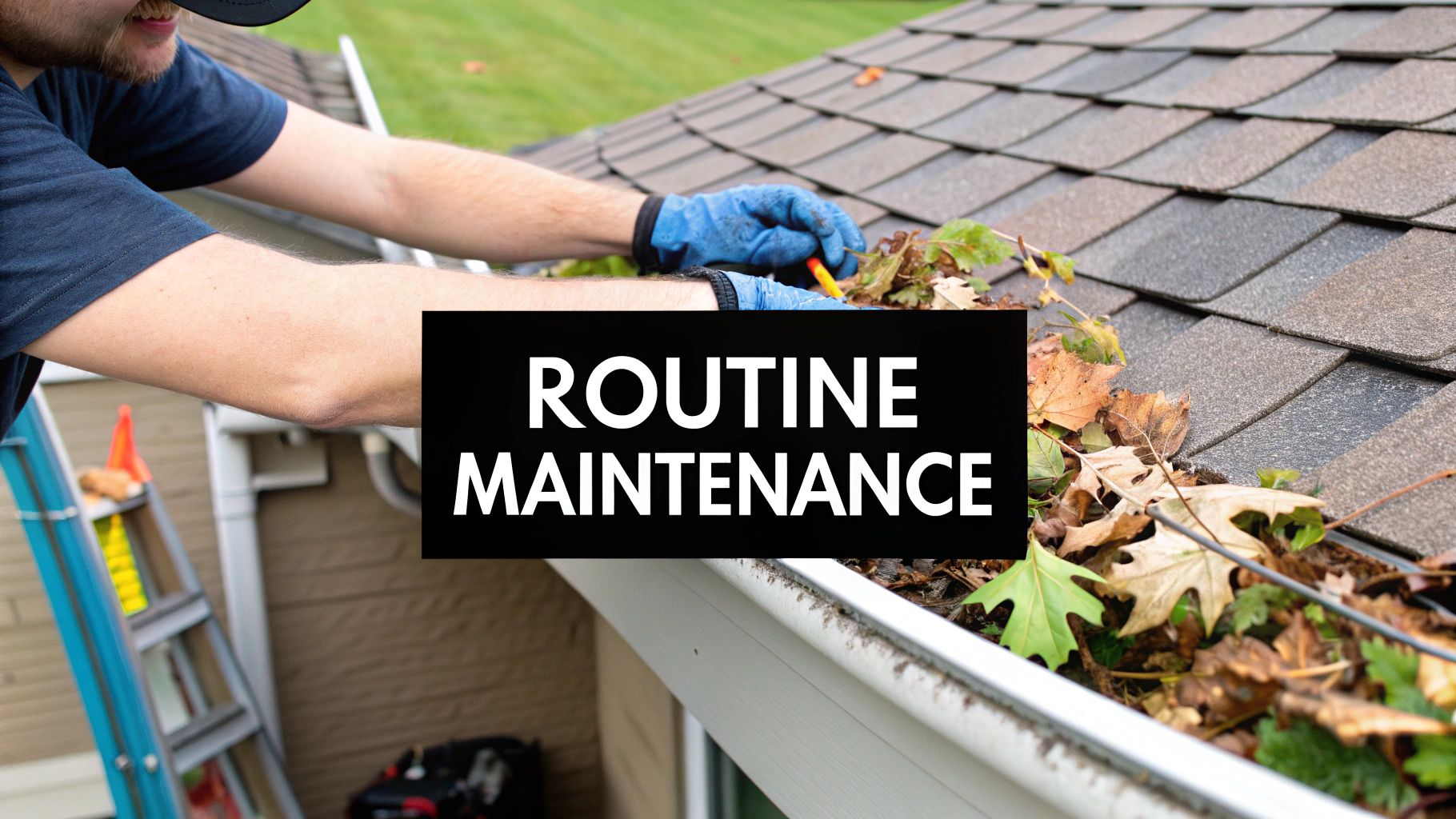
The whole point of maintenance is to stop clogs before they start. Over time, leaves, pine needles, and grit from your shingles can pile up, creating blockages. When water can’t flow, it spills over the sides, potentially damaging your fascia, siding, and even your home's foundation.
Your Seasonal Maintenance Checklist
Catching small issues early is the secret to avoiding big, expensive problems. A quick visual inspection a few times a year, especially after a big storm or when the seasons change, can save you a world of trouble.
Here’s a simple checklist of what to look for:
- Debris Buildup: Can you see leaves, twigs, or other gunk poking out from the top?
- Signs of Sagging: Eyeball the entire curve. Does it still look perfectly level, or is it starting to pull away from the house?
- Water Stains: Look for tell-tale streaks on the fascia or siding right beneath the gutter. That’s a clear sign of overflow.
- Secure Fasteners: Give the hangers and mounting hardware a quick check to make sure everything is still tight and secure.
The Role of Gutter Guards and Professional Help
To dramatically cut down on maintenance, gutter guards are an excellent option. Modern, flexible guard systems can be designed to fit the exact curve of your radius rain gutters, letting water in while keeping leaves and debris out. You can find out more about how these work by exploring high-quality gutter guards.
While some homeowners clean gutters themselves, the unique shape and height of curved gutters—especially on features like turrets—can make it tricky and unsafe. Professionals have the right ladders, tools, and experience to do the job safely and thoroughly.
Many homeowners turn to professionals for help. The global market for gutter repair services is a significant industry. Here in Utah, our weather can be tough on homes, making proactive cleaning and inspections essential for getting the most life out of your gutter system.
Radius Gutters Versus Standard Gutter Options
When you're looking at gutters for your home, the choice between standard K-style or half-round gutters and a custom radius rain gutter boils down to a single, critical factor: the shape of your roofline. These aren't just two different styles; they're engineered for completely different jobs. Knowing the difference is key to protecting your home.
Standard gutters are what you see on most homes. They are produced in long, straight pieces, perfect for straight rooflines. And for that, they work great. The problem starts when you have a curved turret, a rounded bay window, or an arched entryway. That’s where their design just hits a wall.
The Problem with Forcing a Square Peg into a Round Hole
Think about trying to wrap a gift that has a round lid, but all you have are straight pieces of wrapping paper. To make it work, you’d have to cut the paper into dozens of small, angled strips and tape them all together. You'd end up with a chunky, awkward mess full of seams—a shoddy fit that completely ruins the look.
That’s a good analogy for what happens when an installer tries to force standard, straight gutter sections onto a curved part of a roof.
An attempt might be made to chop up straight gutters into short, mitered pieces and then join them with caulk. This can result in a system that's designed to fail. Every single one of those joints is a weak spot, just waiting to leak, especially with the freezing and thawing cycles we get here in Utah.
Aesthetic and Functional Superiority
The visual difference is night and day. A cobbled-together segmented gutter can look clunky and cheap. It breaks up the very architectural lines it’s supposed to be protecting and frankly, it can look like an afterthought.
A true radius rain gutter, on the other hand, is a completely different story.
- Seamless Flow: It's formed from one continuous piece of metal, so there are zero joints or seams along the entire curve. This gets rid of the number one cause of leaks in segmented systems. You can read more about why this matters in our guide to seamless gutters vs regular gutters.
- Enhanced Curb Appeal: You get a smooth, clean line that actually follows and highlights your home’s beautiful architecture instead of fighting against it.
- Superior Performance: With a smooth, uninterrupted channel, water and debris flow straight to the downspout. This drastically cuts down on the chances of clogs, ice dams, and overflows.
At the end of the day, for any home with curved architecture, radius rain gutters aren't just a better choice—they're the only right choice. It’s about doing the job properly to ensure your home is protected for the long haul while preserving its unique look.
Protecting Your Utah Home with Custom Solutions
If your home has beautiful curved features—like a turret, a rounded entryway, or a sweeping bay window—you already know standard gutters just won’t work. Trying to protect these unique architectural elements with straight, segmented gutter pieces is a recipe for disaster. The countless seams and joints are just waiting to leak, pull apart, and fail, especially under the weight of Utah's heavy snow and intense summer storms.
This is where radius rain gutters come in. They aren't just an upgrade; for homes with curves, they're the only real solution. Custom-formed to match your roofline perfectly, these seamless gutters provide a clean, elegant look while ensuring every drop of water is channeled exactly where it needs to go—away from your foundation, walls, and landscaping.
Why a Perfect Fit is Everything
With curved architecture, there's no room for "close enough." Even a small gap between the gutter and your fascia board creates an opening for water to sneak in, leading to wood rot, mold, and expensive structural damage over time. A perfect fit is the only way to guarantee total protection.
Think of it this way: you wouldn't patch a hole in a boat with duct tape and hope for the best. For homes with unique curves, segmented gutters are the duct tape solution. A custom-fabricated radius gutter is the permanent, watertight fix your home deserves.
Ultimately, investing in custom radius rain gutters is about protecting both the structural integrity and the curb appeal of your home. Whether you're in a historic part of Salt Lake City or a newer neighborhood in Lehi or Orem, this specialized approach is the key. To see how professionals protect homes all along the Wasatch Front, check out our homepage for more details.
Your Top Questions About Radius Gutters, Answered
Even after getting the basics down, you probably have a few more specific questions about radius rain gutters. Let's tackle some of the most common ones heard from homeowners. This section aims to clear up any lingering doubts.
Are Radius Gutters a Significant Investment?
Custom-fabricated solutions like radius gutters typically represent a greater investment than standard, off-the-shelf options. This isn't just a different product; it's a custom solution built specifically for your home.
The value comes from the expertise, precise measurements, and specialized on-site machinery needed to craft a seamless gutter that perfectly matches your home's curves. It is an investment in long-term performance. Attempting to force straight sections onto a curved roofline can be a recipe for leaks and water damage down the road. In the long run, doing it right the first time is often the most cost-effective choice.
Can I Still Get Gutter Guards on Curved Gutters?
Absolutely. Most modern, flexible gutter guard systems work beautifully with radius rain gutters. The secret is in the installation. A skilled technician knows how to fit the guard so it follows the gutter's curve perfectly, leaving no gaps for debris to sneak in.
When done correctly, a gutter guard on a curved system gives you all the same benefits you'd expect on a straight run. It keeps leaves and twigs out, ensures rainwater flows freely, and dramatically cuts down on your maintenance time.
How Long Does a Radius Gutter Installation Take?
Installing radius gutters typically takes more time than a standard job because the process involves crafting them on-site, not just hanging pre-made sections. The total time really depends on the complexity of your home's architecture.
A simple, gentle curve on a porch might be a relatively quick project. On the other hand, a home with multiple, tight-radius turrets will naturally take longer. The process involves meticulous measuring and the careful forming of the metal to ensure a perfect, leak-proof fit.
For homes in places like Provo or West Jordan, a good contractor can provide a solid time estimate after they've seen the job and measured everything up.
What if the Fascia Board Is Damaged?
This is a critical point. A strong, solid fascia board is the foundation for any gutter system, especially a custom one. If an inspection reveals any rot, warping, or other damage, that must be repaired or replaced before the new gutters go on.
Trying to mount a high-quality system on a weak surface is asking for trouble—it will eventually sag, pull away, and fail. Ensuring this prep work is done right helps secure your investment for decades.
If your home stands out with beautiful architectural curves, it deserves a gutter system designed to match. A custom-fabricated radius gutter is the only way to properly protect its unique structure and curb appeal.
For a perfect fit that’s guaranteed to stand up to Utah's wild weather, you need a local expert. Contact Prime Gutterworks today for a free, no-hassle estimate and see what a true radius gutter solution can do for your home.
Learn more and schedule your free estimate at Prime Gutterworks